
Alianza Jambato
Foundation that seeks to unite efforts for the conservation of threatened biodiversity, based on an integral, multi and interdisciplinary conservation model, grounded in evidence and environmental education; and that actively involves local communities, recognizing their local and cultural context. We were born with our emblematic jambato conservation project (Atelopus ignescens), an endemic harlequin frog from Ecuador and critically threatened with extinction.
About Alianza Jambato
Alianza Jambato is a non-governmental, non-profit organization that was born by bringing together an interdisciplinary team of professionals and national and international institutions to work for the conservation of threatened biodiversity, species, and ecosystems.
Our framework of action includes the design, implementation, and execution of conservation programs that encompass projects for protecting and increasing vulnerable species populations and habitats, research, environmental education, community engagement, environmental communication, and sustainability.
Five years after the rediscovery of the jambato, an emblematic frog of the Ecuadorian highlands, researchers and community leaders are joining forces to conserve it.
The jambato toad (Atelopus ignescens) is a small frog that was once historically abundant but suddenly disappeared in the late 1980s; its last record dated from 1988. In 2004, it was declared extinct by the IUCN. However, it was rediscovered in 2016 in the parish of Angamarca, in Cotopaxi Province (Pujilí Canton). David Jailaca, a 12-year-old boy, found it while cutting alfalfa near his home. To him, it was just another local toad, as he didn’t know it was such a sought-after species. Only when he heard that a reward was being offered for finding it did he realize how special it was. After this, it was confirmed that the jambato still survived in this remote valley.
The Jambatu Center for Amphibian Research and Conservation led this campaign, after which an emergency assisted-breeding program was launched and has been successful. However, no efforts had been made to conserve the wild population in its last refuge.

Five years after the rediscovery of the jambato, an emblematic frog of the Ecuadorian highlands, researchers and community leaders are joining forces to conserve it.
The jambato toad (Atelopus ignescens) is a small frog that was once historically abundant but suddenly disappeared in the late 1980s; its last record dated from 1988. In 2004, it was declared extinct by the IUCN. However, it was rediscovered in 2016 in the parish of Angamarca, in Cotopaxi Province (Pujilí Canton). David Jailaca, a 12-year-old boy, found it while cutting alfalfa near his home. To him, it was just another local toad, as he didn’t know it was such a sought-after species. Only when he heard that a reward was being offered for finding it did he realize how special it was. After this, it was confirmed that the jambato still survived in this remote valley.
The Jambatu Center for Amphibian Research and Conservation led this campaign, after which an emergency assisted-breeding program was launched and has been successful. However, no efforts had been made to conserve the wild population in its last refuge.
ANGAMARCA
THE LAST KNOWN REFUGE OF THE JAMBATO
The last known refuge of the jambato is located in Angamarca, a parish situated on the western Andean mountain range in Cotopaxi province. The area is rich in history, culture, and landscapes. However, contrary to what might be expected, the jambato was not found in pristine areas, but rather in pastures and farmlands. Thus, the jambato lives very close to the inhabitants of the parish.
Since the foundation’s beginning, we have worked closely with the communities and parish authorities, who are our main allies. Our work involves experiential place-based environmental education, knowledge exchange, and community science. In addition to workshops and field outings with children, adolescents, and adults, we also have local assistants who work alongside the researchers.
We seek to build and strengthen capacities and raise awareness among local residents so they learn to value and care for the jambato. The jambato is becoming a flagship species that will allow us to expand conservation efforts to other threatened species in the area.
THE JAMBATO
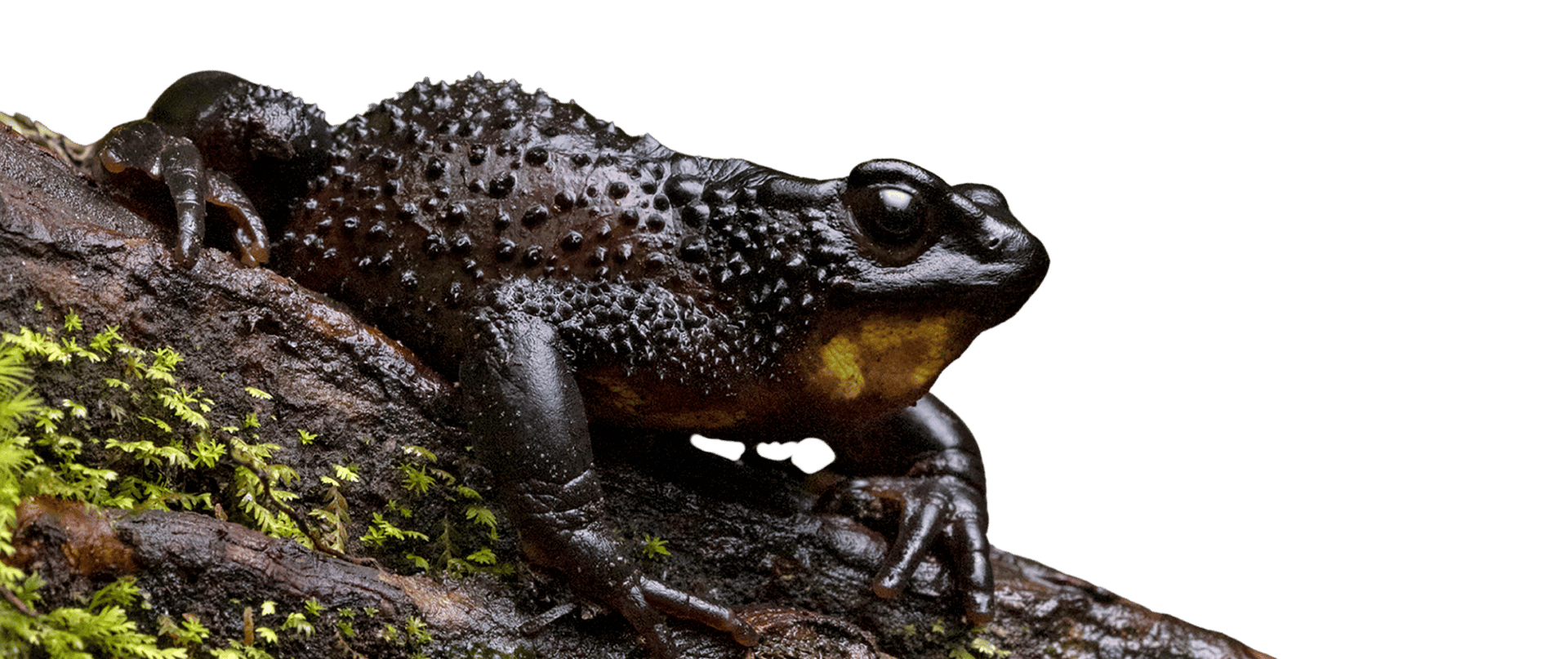
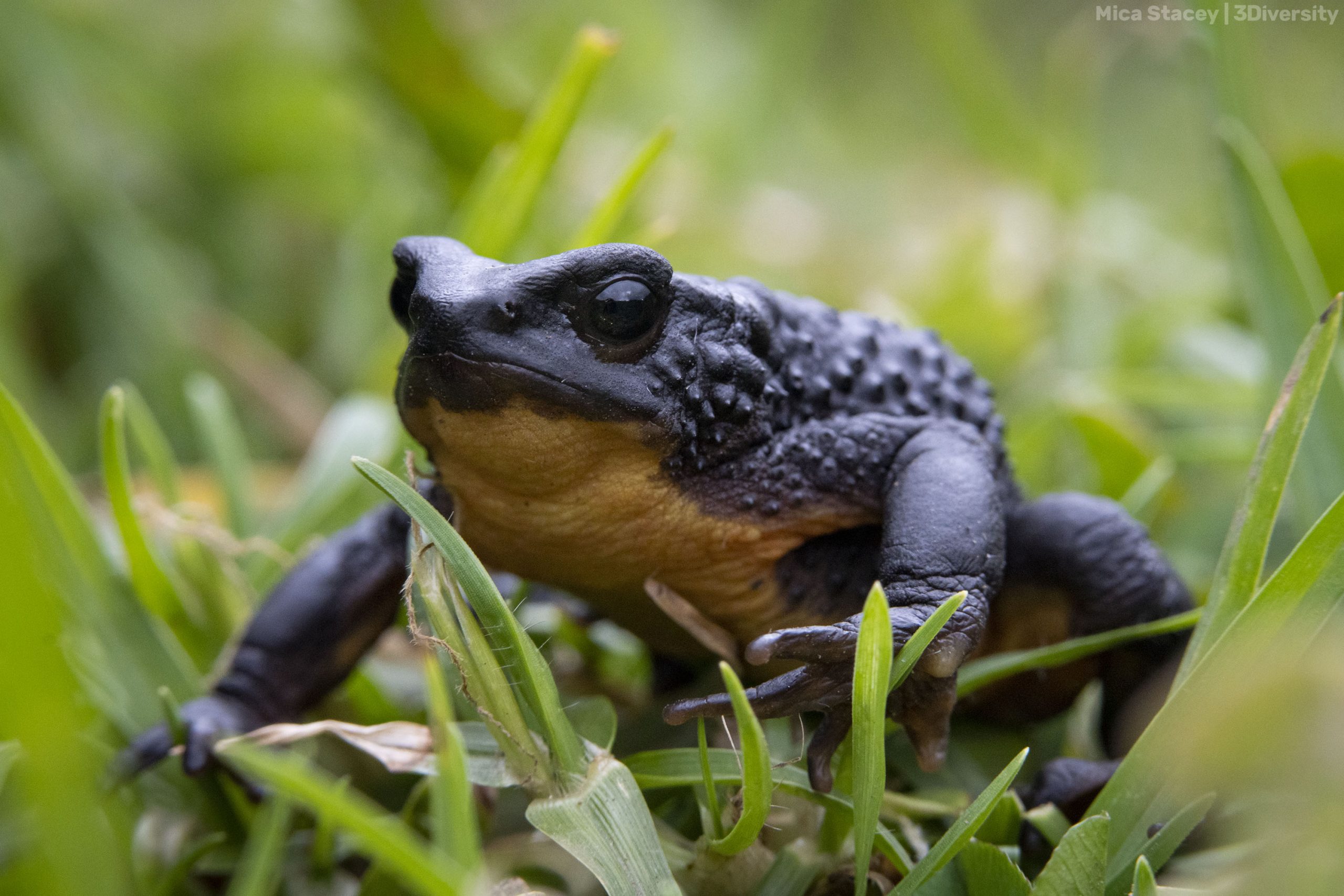
The scientific name of the jambato, Atelopus ignescens, refers to the strong black-orange contrast between its back and belly, similar to a glowing coal: “ignescens” means “incandescent” in Latin. Its common name derives from the Kichwa word “jampatu,” which means “toad.” It was so abundant that it practically represented “the toad” to its human neighbors. It was commonly found in grasslands, pastures, and even around cities like Latacunga, Quito, and Ambato. In fact, the city of Ambato is named after this little toad. It is a diurnal, terrestrial, and slow-moving species. It reproduces in fast-flowing rivers, using a mating embrace known as amplexus. The female lays eggs in rivers and streams, and its tadpoles live under rocks, thanks to a sucker that allows them to cling tightly. In our foundation, we conduct monthly visits to learn more about the biology of this little frog, which still holds many secrets.
Milestones
The Second Chance of the Jambato: Science, Community, and Global Awareness

The International Union for Conservation of Nature (IUCN) features Alianza Jambato in a publication shared by Leonardo DiCaprio.
In May 2022, the International Union for Conservation of Nature (IUCN) published an article recounting the rediscovery of the páramo black jambato (Atelopus ignescens) and the creation of Alianza Jambato as a model of collaborative conservation between local communities, scientists, and partner organizations. This inspiring story was shared on social media by actor and environmental activist Leonardo DiCaprio, bringing a message of hope and action for Ecuadorian biodiversity to a global audience.
The #Jambato Harlequin Toad vanished in the 1980s & for years it was lost, until 2016 when a young boy rediscovered it. A new alliance of Atelopus Survival Initiative partners is now working together to save this species. #ElJambato https://t.co/qGeEo8RI4Y
— Leonardo DiCaprio (@LeoDiCaprio) July 14, 2022
THE JAMBATO: FROM A SYMBOL OF EXTINCTION TO ONE OF HOPE
The black páramo jambatoAtelopus ignescenswas once a common toad in the Ecuadorian Andes until it mysteriously disappeared in the 1980s. Decades later, its unexpected rediscovery sparked new hope for its conservation.
This video tells the story of how a species declared possibly extinct managed to survive in a small valley, and how local communities, researchers, and allies have come together to protect it. It is a story of collaboration, resilience, and second chances that invites everyone to join the effort to prevent its permanent disappearance.
THE JAMBATO: FROM A SYMBOL OF EXTINCTION TO ONE OF HOPE
The black páramo jambatoAtelopus ignescenswas once a common toad in the Ecuadorian Andes until it mysteriously disappeared in the 1980s. Decades later, its unexpected rediscovery sparked new hope for its conservation.
This video tells the story of how a species declared possibly extinct managed to survive in a small valley, and how local communities, researchers, and allies have come together to protect it. It is a story of collaboration, resilience, and second chances that invites everyone to join the effort to prevent its permanent disappearance.
Jambato Negro: A Song to Remember
An emotional composition from the project “Harlequin Frogs, the Jewels of Our Forests and Páramos,” performed by Jacana Jacana and illustrated by Selva Selvita, celebrating the story and spirit of the jambato in the Ecuadorian Andes.
Donors


Collaborators
Collaborators
Promoters

